
2020-2025
Project Type
PhD Thesis
End-to-end
Software
Figma
Notion
ChatGPT
Illustrator
Photoshop
Overview
The Spanish Cathedral is a research and design project that proposes a digital and transmedia model for reinterpreting and disseminating Gothic heritage. Across 13 Spanish cathedrals, it connects historical architecture with contemporary audiences through accessible and coherent digital experiences, centered on the user from both a collective and individual perspective.
Despite their cultural and symbolic importance, Gothic cathedrals in Spain have rarely been approached through contemporary design and transmedia narrative frameworks. While many possess a digital presence, their content remains scattered—lacking a strategy that integrates architectural, historical, and experiential dimensions. As audiences increasingly access culture through multiple formats and devices, there was a critical need to rethink how these heritage spaces communicate: in a current, accessible, and user-connected way.
Additionally, resources like audio guides have short lifespans and don't foster continuous learning.
The research included 13 Spanish cathedrals: Astorga, Barcelona, Burgos, Cuenca, Girona, León, Mallorca, Palencia, Toledo, Santiago de Compostela, Segovia, Seville, and Valencia.
This project demonstrated how UX design can act as a rigorous methodology for heritage research, creating both academic and cultural impact.
Translates historical-architectural knowledge into accessible and reusable digital formats.
Unifies narrative and experience, breaking digital fragmentation across cathedrals.
Validates UX design as rigorous methodology for heritage research, generating publishable academic content (ACM Journal on Computing and Cultural Heritage, Volume 17, Issue 2).
Demonstrates scalability: adaptable to multiple audiences (academics, tourists, students, children) and extensible to other Gothic cathedrals across Spain.
This project was developed as part of my doctoral thesis, defended on October 30, 2025, with Cum Laude distinction.
My work focused on translating historical and academic content from the Late Medieval period into accessible and coherent information systems. I structured narratives, content architectures, and user journeys adapted to diverse audiences, platforms, and knowledge levels—consolidating a vision of design as a scalable narrative system where each channel serves a specific function within an integrated experience.
User interviews and consultations with heritage and communication managers from each cathedral
Analysis of current digital technologies available across cathedrals
Contextual observation through in-person visits to each cathedral
Comparative research of similar projects (transmedia and cultural interventions)
Academic bibliography review on Gothic architecture and the Late Medieval period
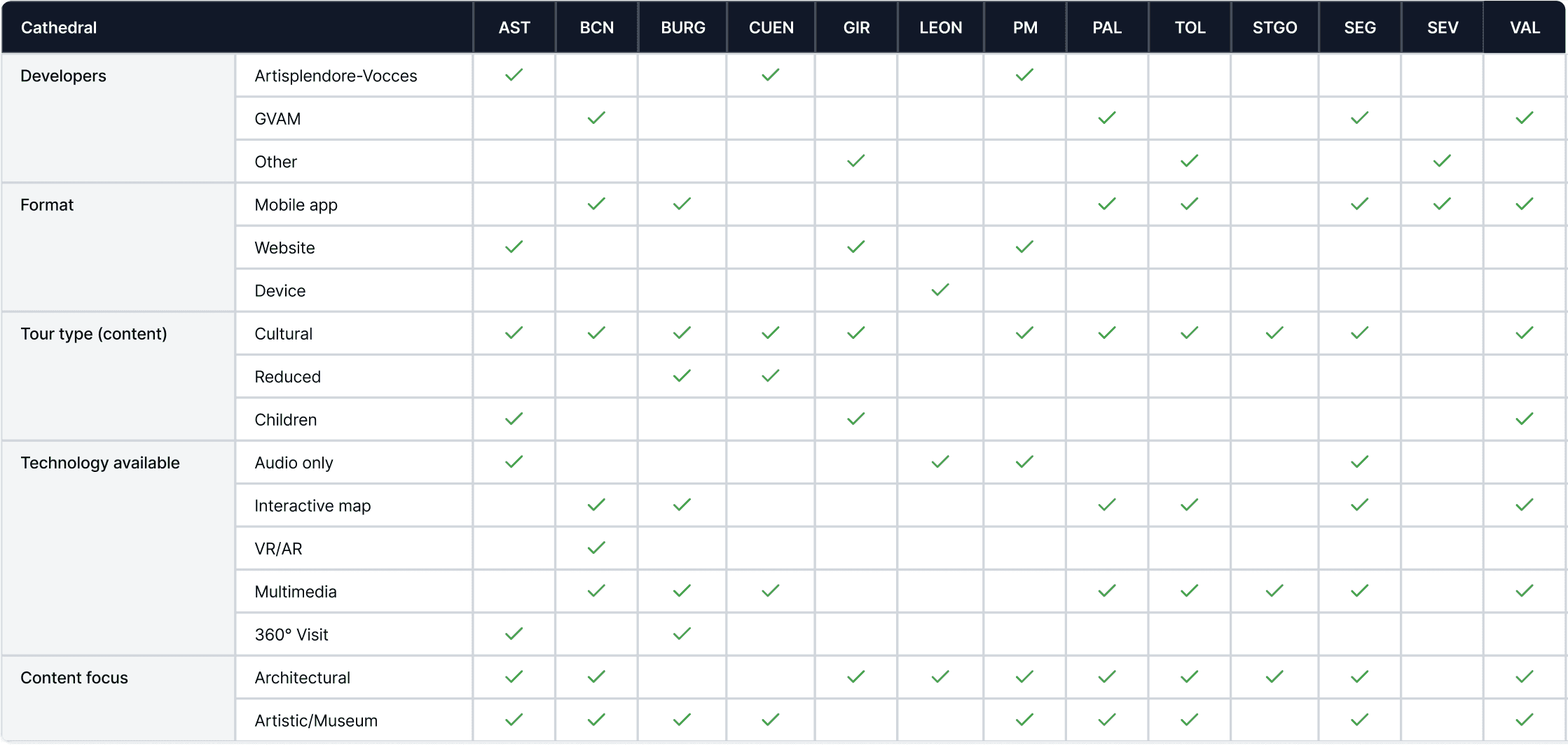
In addition to the global research carried out for the project, an analysis of the current situation of the mobile applications of the cathedrals under consideration was conducted. The following table shows the results, taking into account: developers, formats, types of content, available technologies, and content focus.
Evaluation of Existing Mobile Applications in Spanish Gothic Cathedrals
Three primary user profiles emerged, based on objectives and analysis:
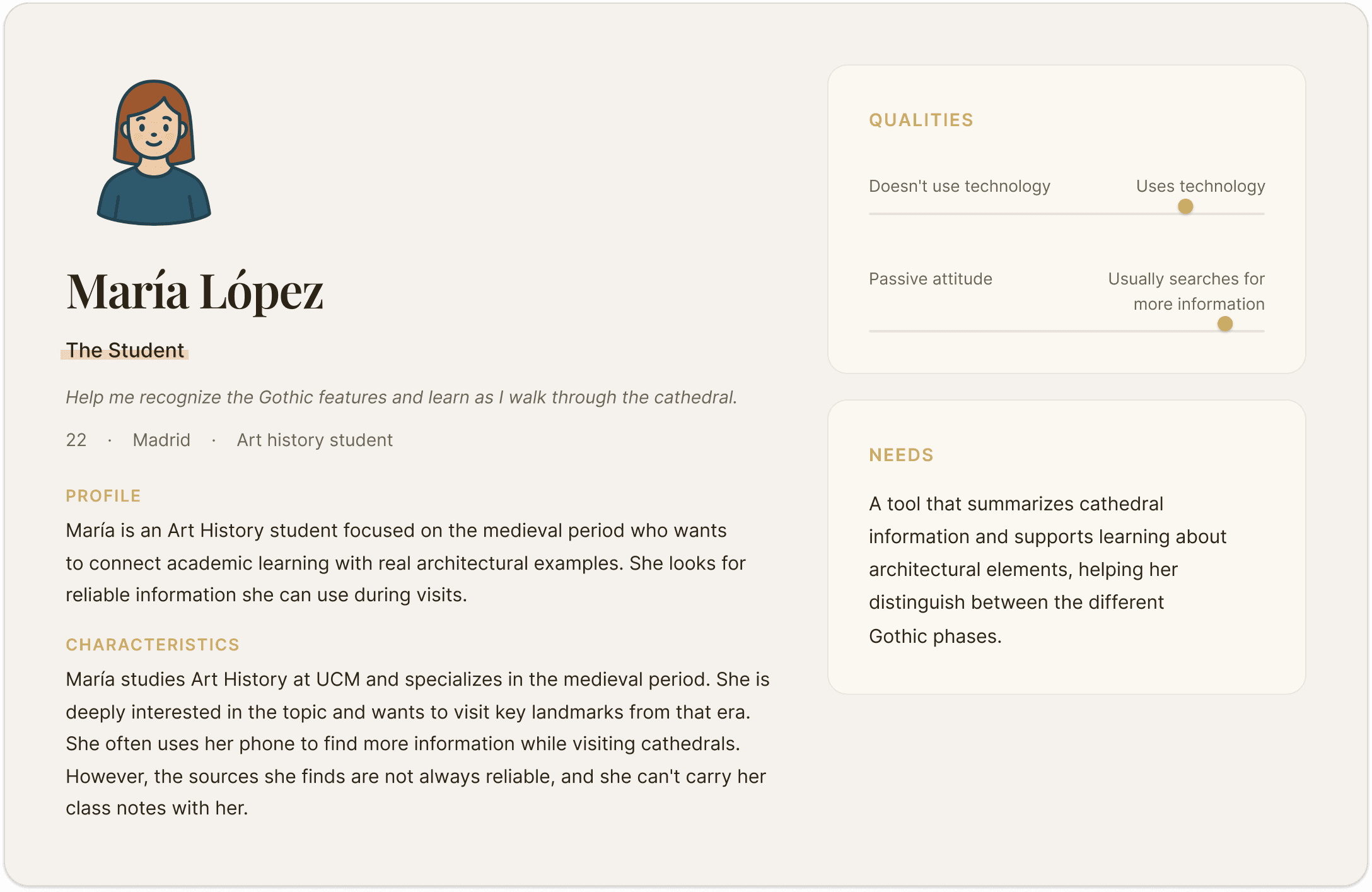
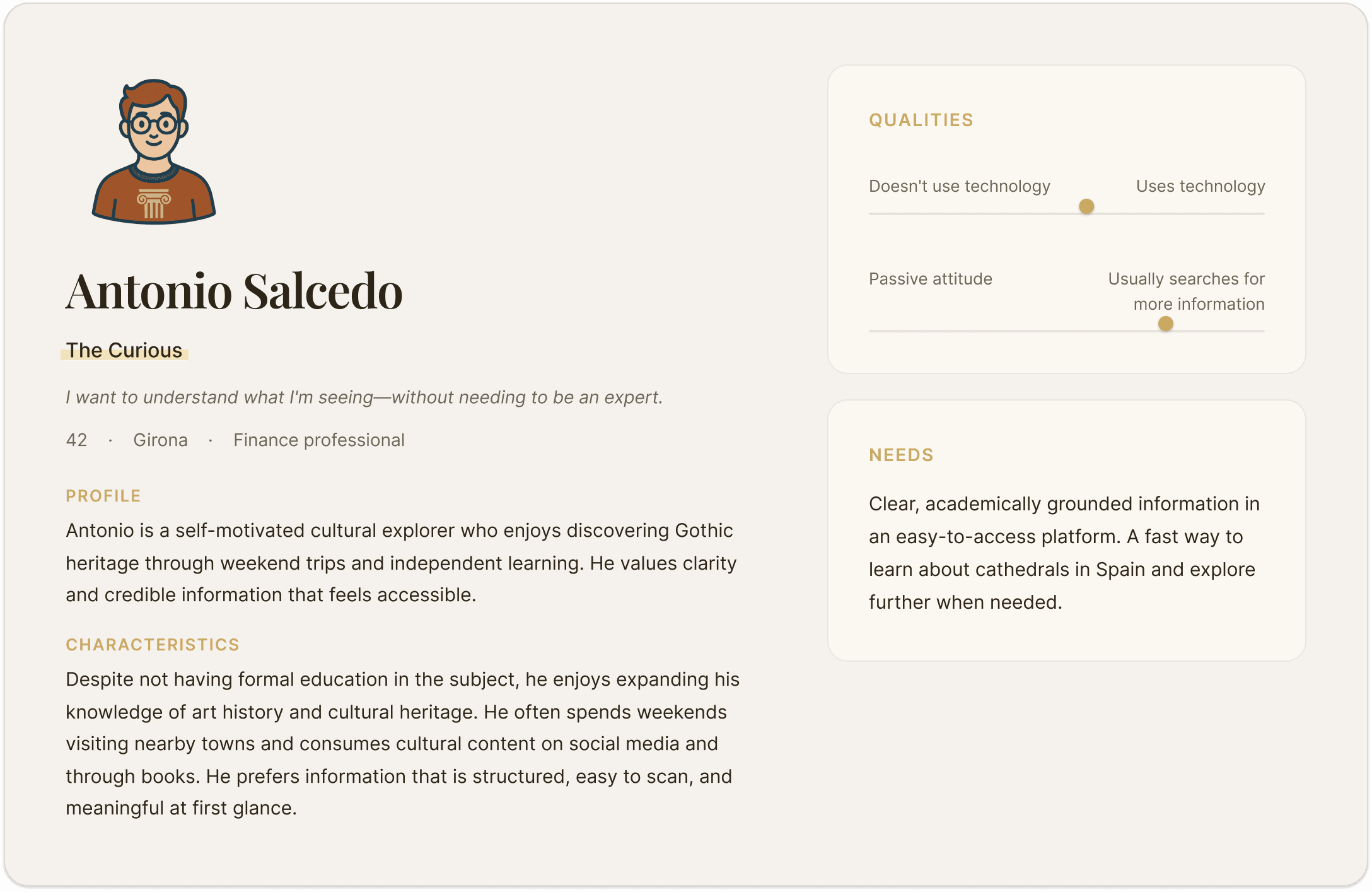
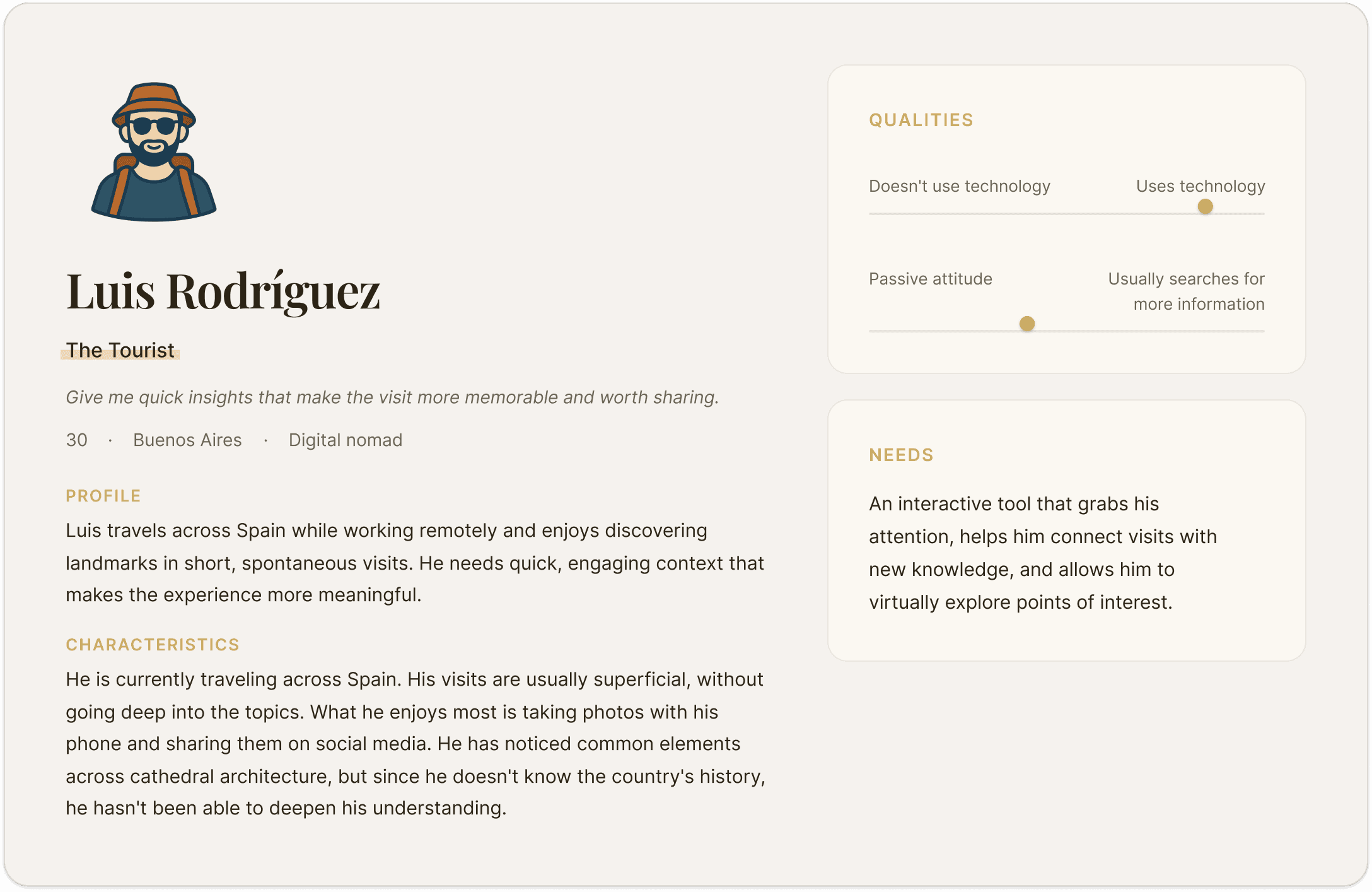
Users want to know what they're seeing, but quickly and contextually.
There's cultural interest, but resistance to lengthy or overly technical discourse.
Digital experience varies depending on institutional budget.
There's an absence of collaborative, unified digital vision across cathedrals.
Heritage can be understood as an information system.
While some cathedrals collaborate, this doesn't extend to the digital realm.
The design objectives focused on facilitating access to heritage from a cultural rather than religious perspective. A clear and homogeneous information architecture was essential to break both the physical and temporal barriers that typically limit cathedral visits to:
Translate academic content into language accessible to diverse audiences.
Create a scalable, replicable transmedia cultural diffusion model.
The value lies not in the channel, but in the narrative and structural coherence across them. Designing heritage means designing systems of relationships between content, people, and contexts.
The project is conceived as an ecosystem of interconnected pieces, where each medium fulfills a specific role:
Transmedia Ecosystem
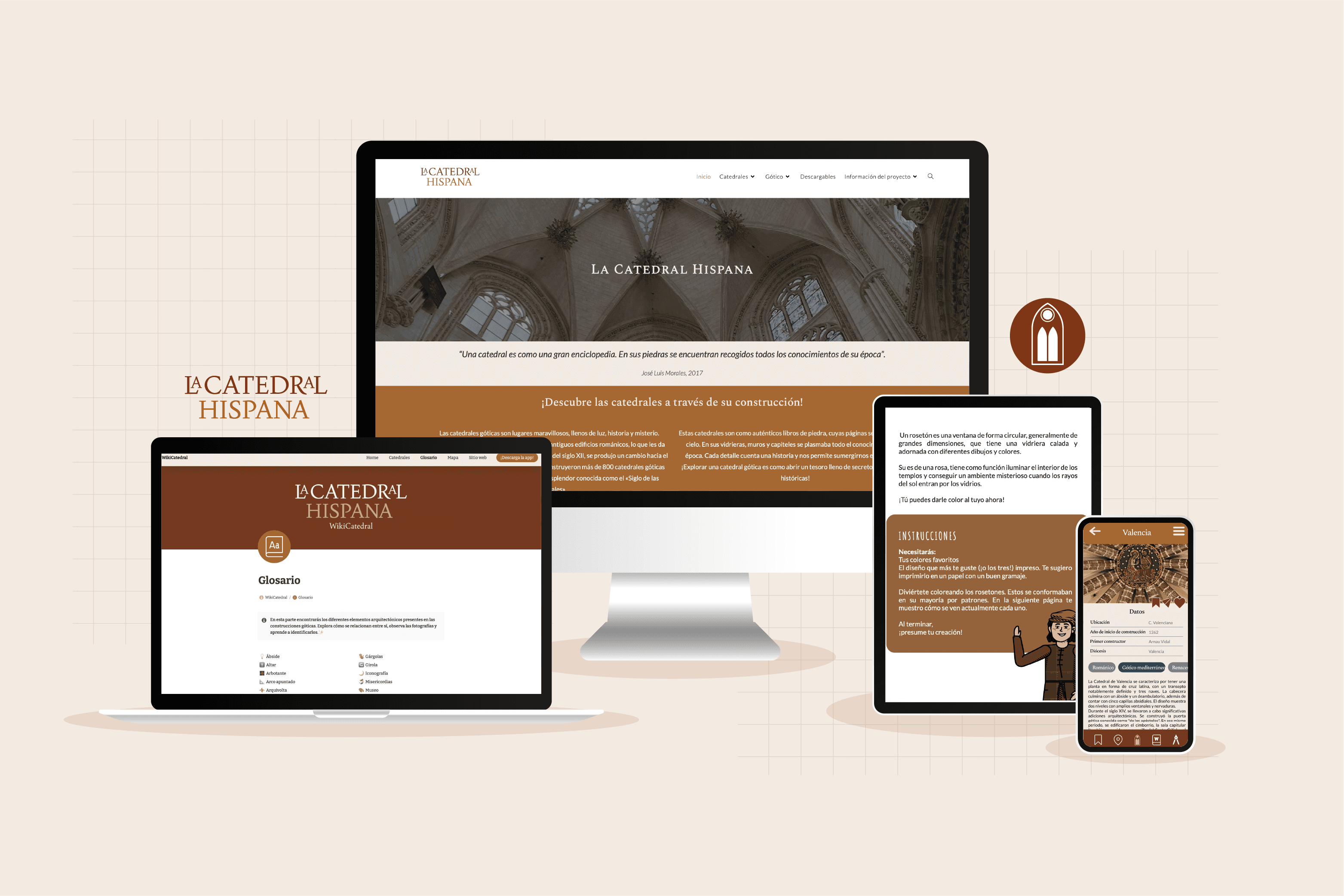
For practical reasons, the following sections focus primarily on the mobile application.
This choice is grounded in the fact that this design directly led to the publication of the scientific article “The Spanish Cathedral: a Prototype of Mobile Application for Access to the Religious Cultural Heritage of Gothic Hispanic Cathedrals”, published in the ACM Journal on Computing and Cultural Heritage, Vol. 17, No. 2.
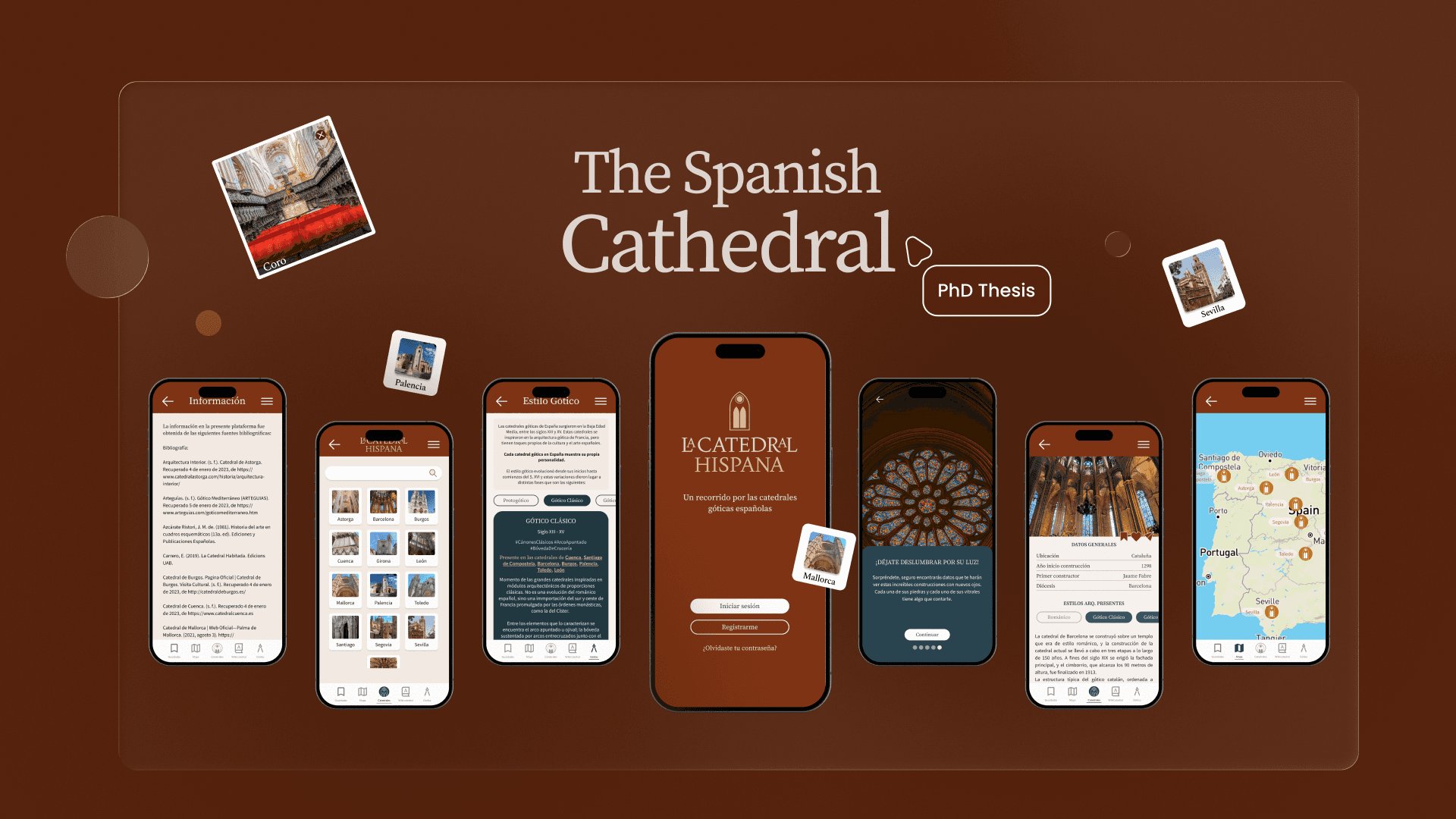
The mobile app is a cultural mediation tool designed to support access to and understanding of Gothic heritage in Spain. It allows users to locate Gothic cathedrals, explore general and architectural information, and identify key elements through structured, visual, and contextual content.
The app organizes knowledge around the different phases of Gothic architecture and offers multiple entry points encouraging dynamic navigation. Personalization features enable users to save points of interest and build their own cultural paths, adapting the experience to individual curiosity and knowledge levels.
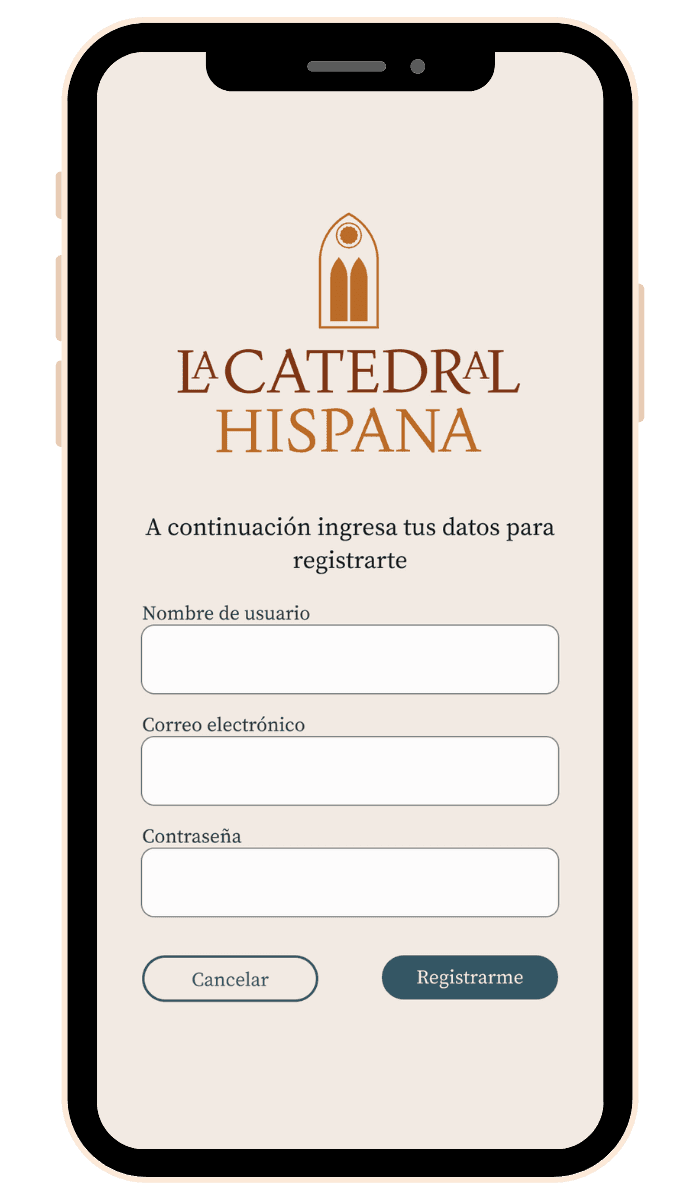
I designed The Spanish Cathedral logo by visually synthesizing key elements of Gothic architecture. The symbol abstracts a pointed arch with a rose window, reinterpreted through a geometric and contemporary lens to function as a cultural rather than strictly religious identifier. This approach preserves architectural meaning without literal representation.
The logo was developed in multiple variants—vertical, horizontal, and icon-only—to adapt to different contexts and scales across the transmedia ecosystem. The color system was defined using tones traditionally associated with religious and academic contexts.

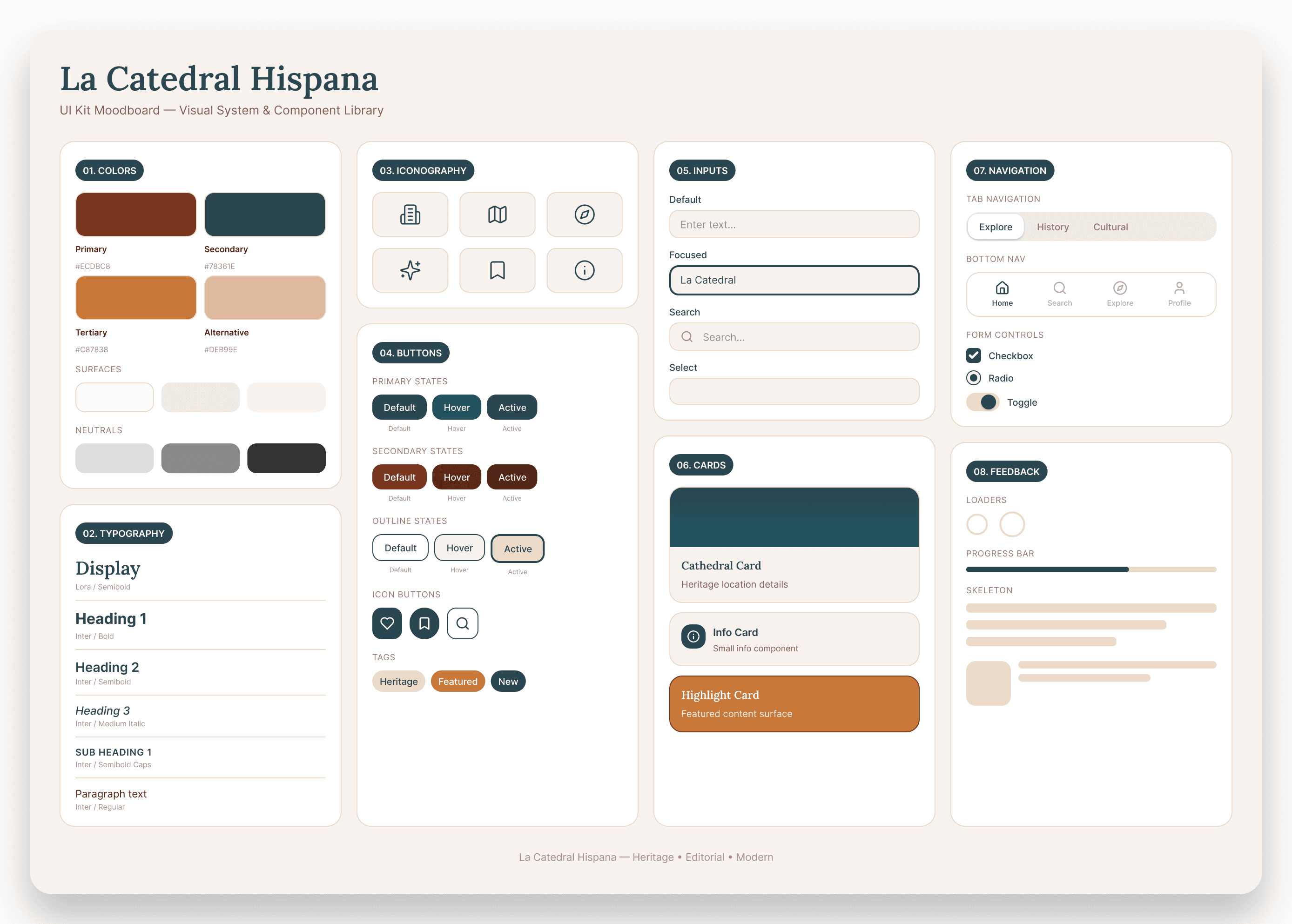
The interface design evolved into a reusable UI Kit, created to ensure consistency and scalability across the mobile app and the website. The system includes components such as buttons, states, cards, lists, and navigation patterns, defined through hierarchy, readability, and accessibility principles.
Navigation is structured through multiple entry points: map, list, wiki, and Gothic phases. Hypertext relationships support progressive, non-linear learning.
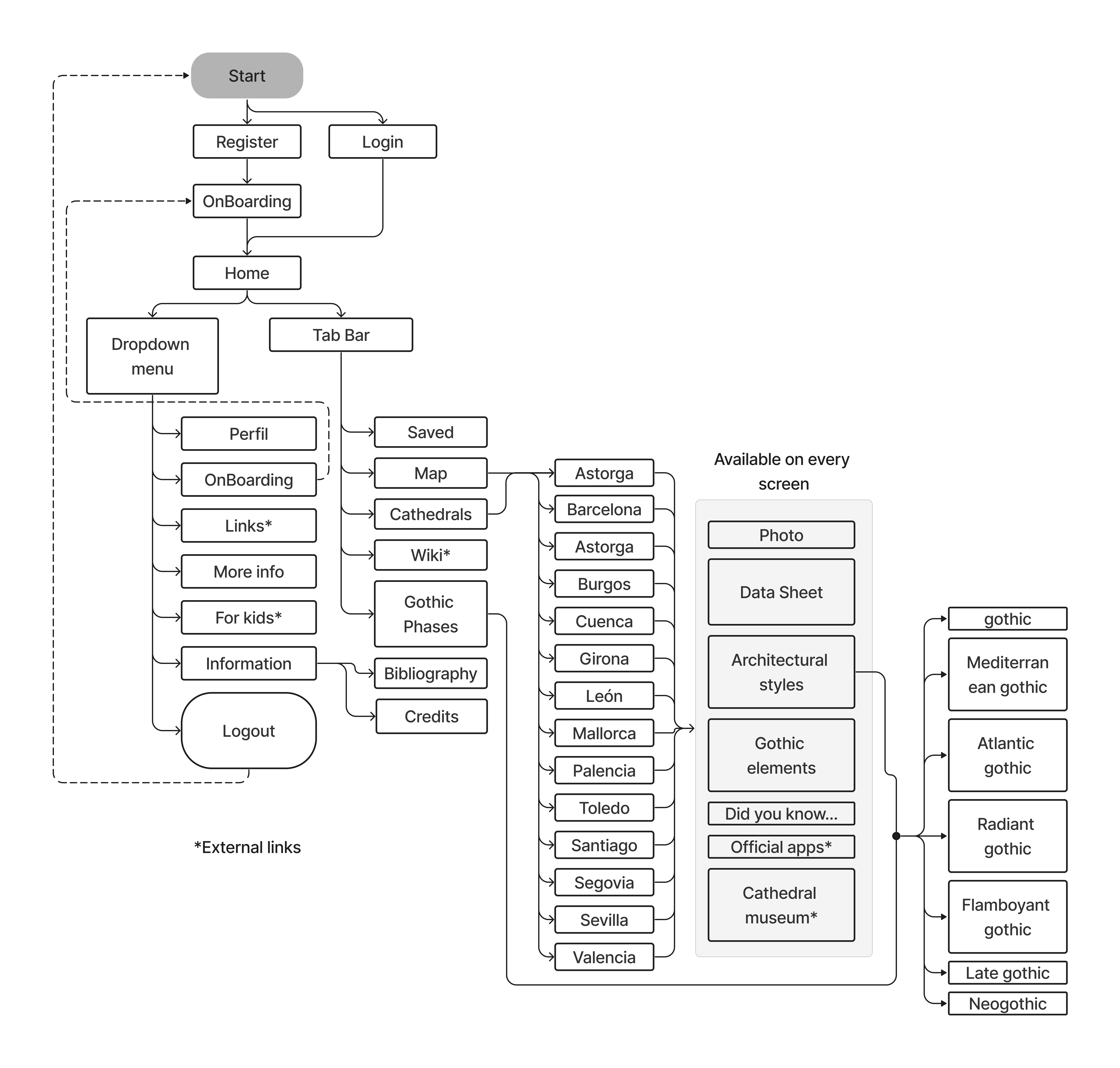
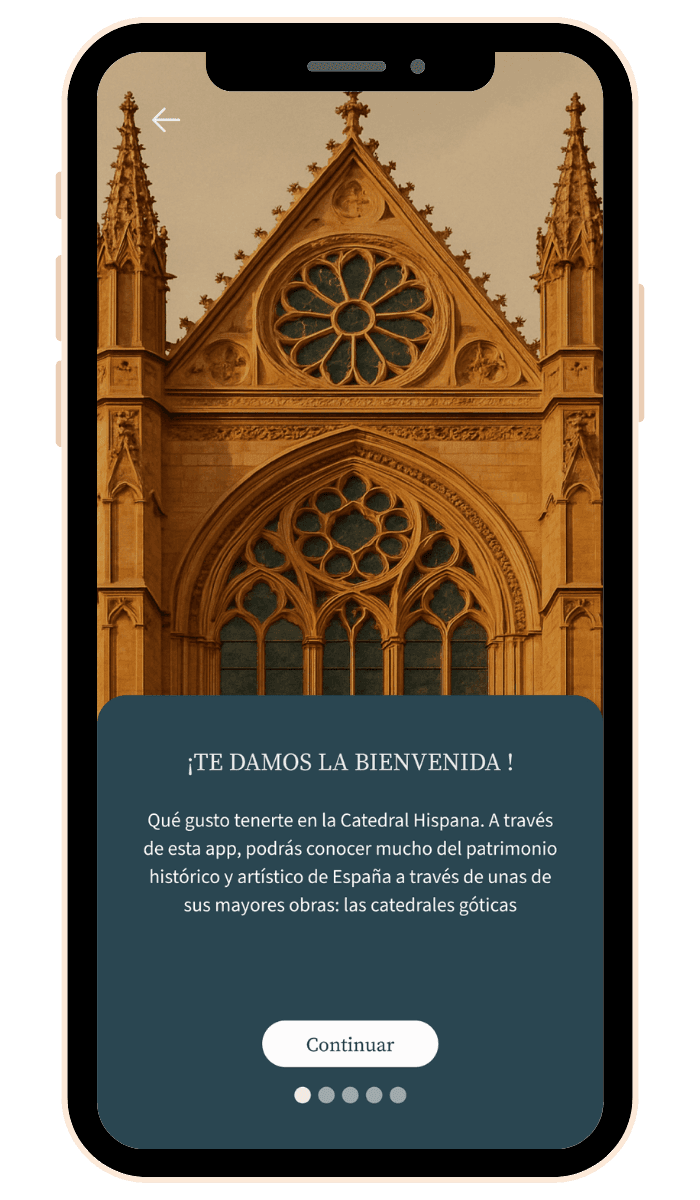
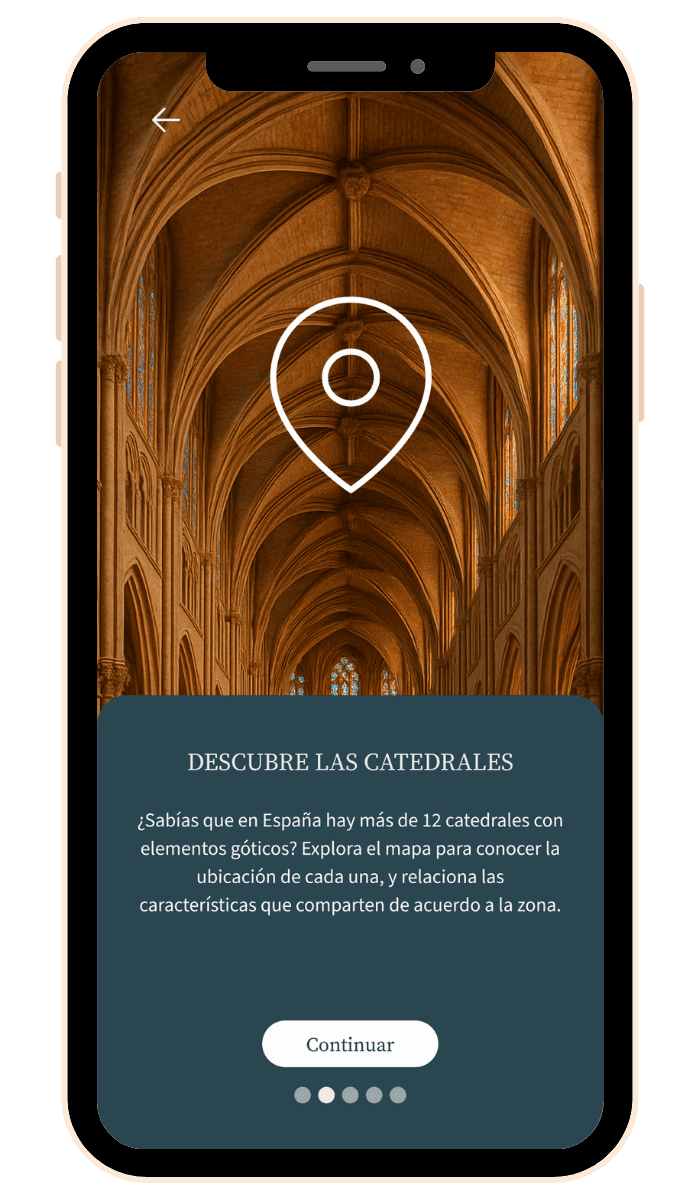
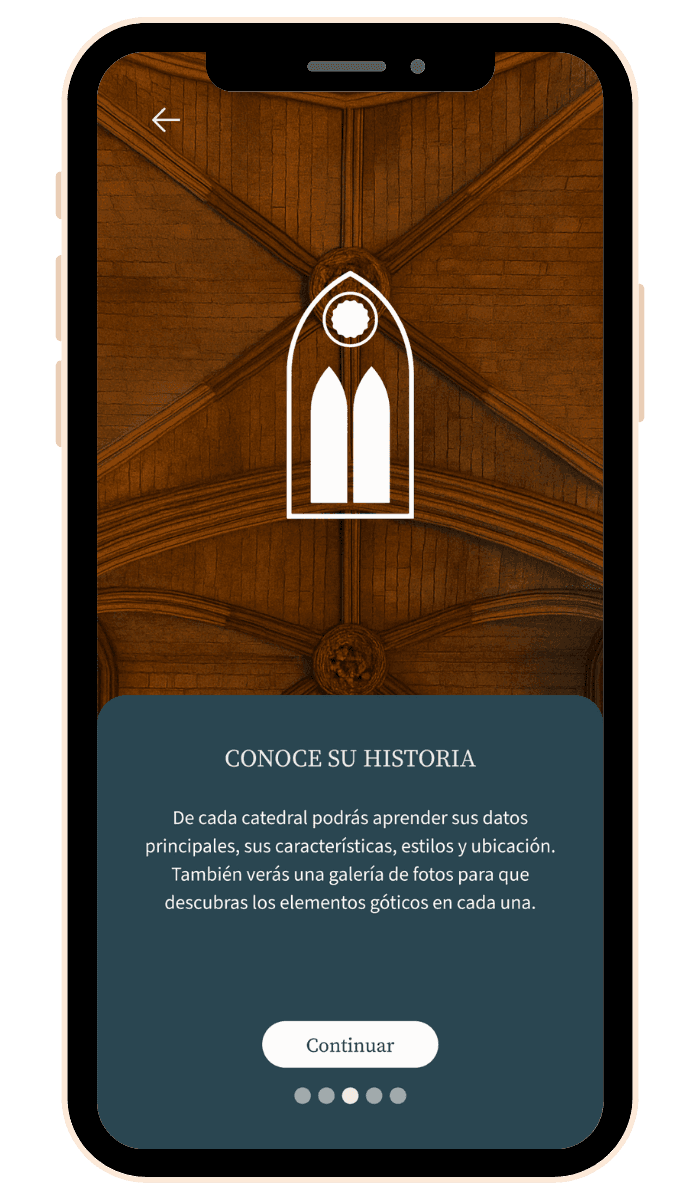
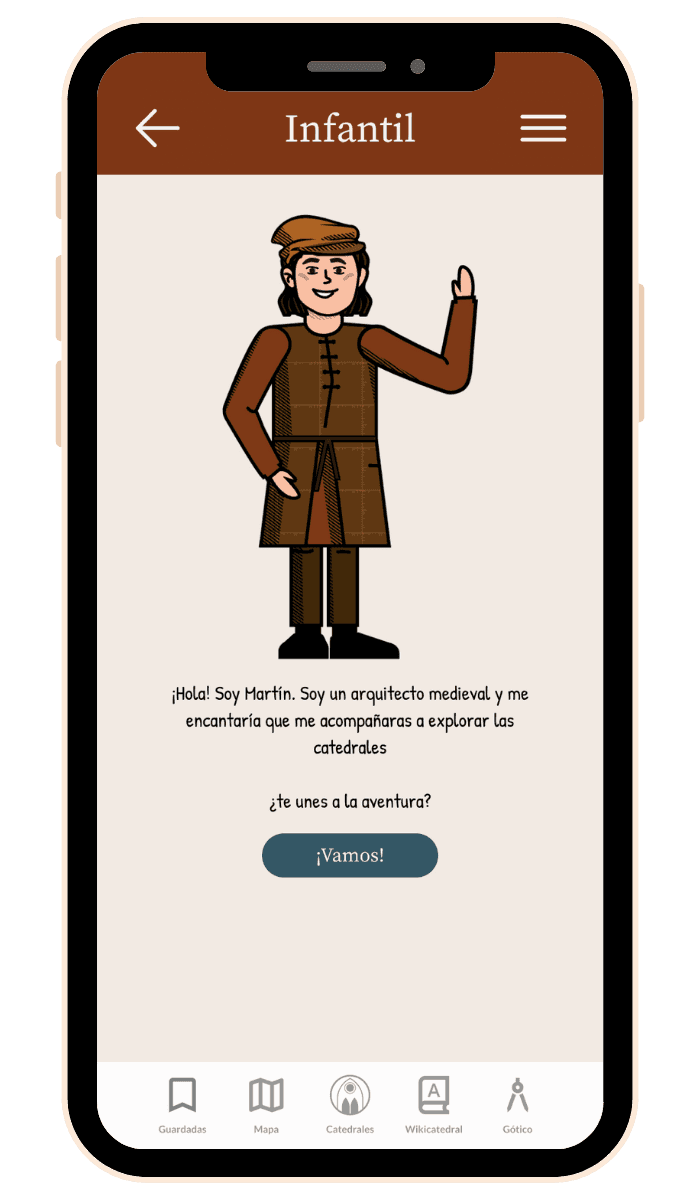
This onboarding flow is shown only once to avoid friction, but it remains accessible at any time through the hamburger menu. This approach balances initial guidance with user control, supporting gradual learning while respecting different levels of familiarity with Gothic heritage.
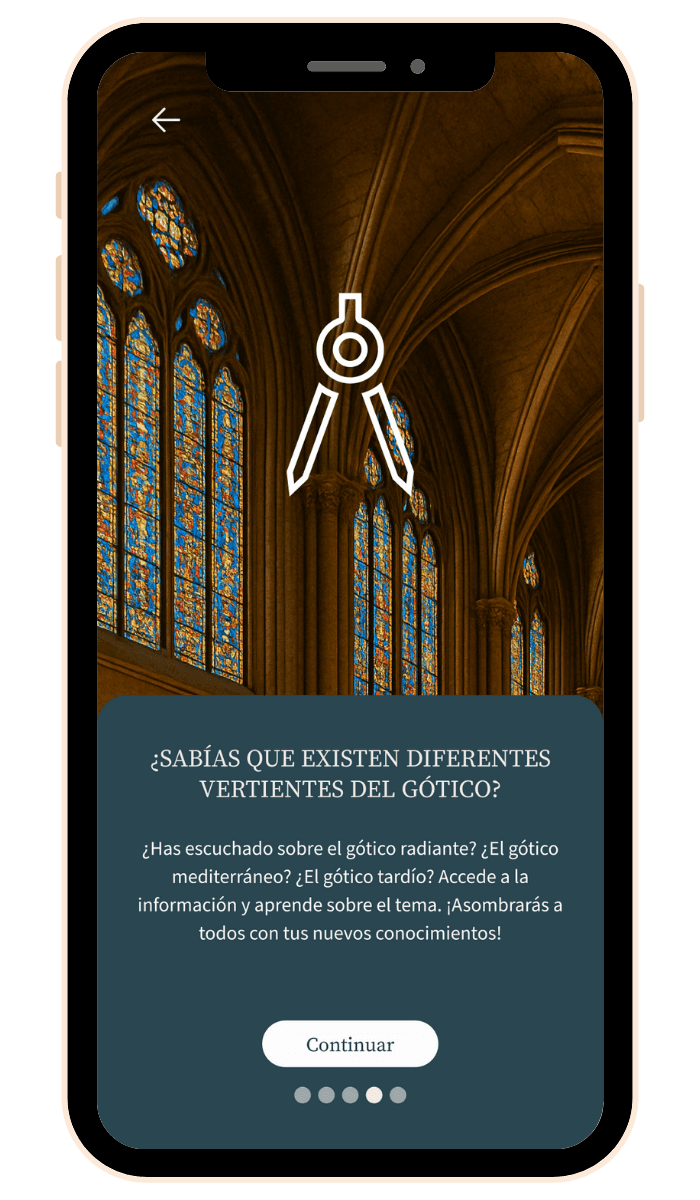
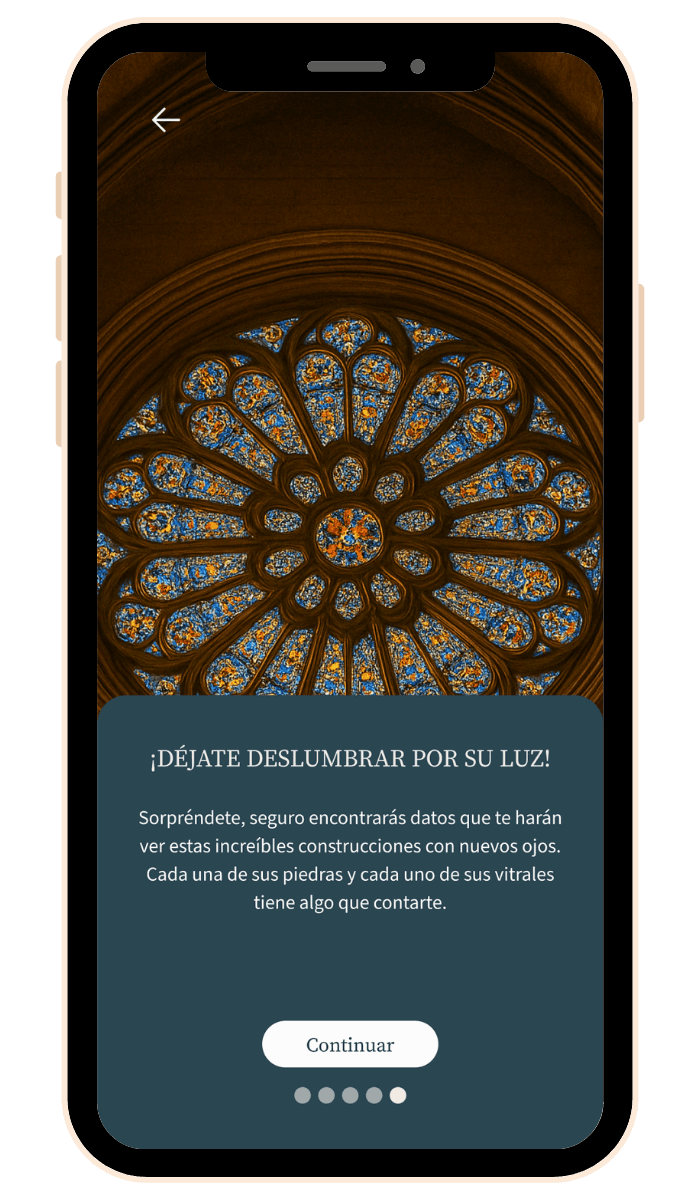
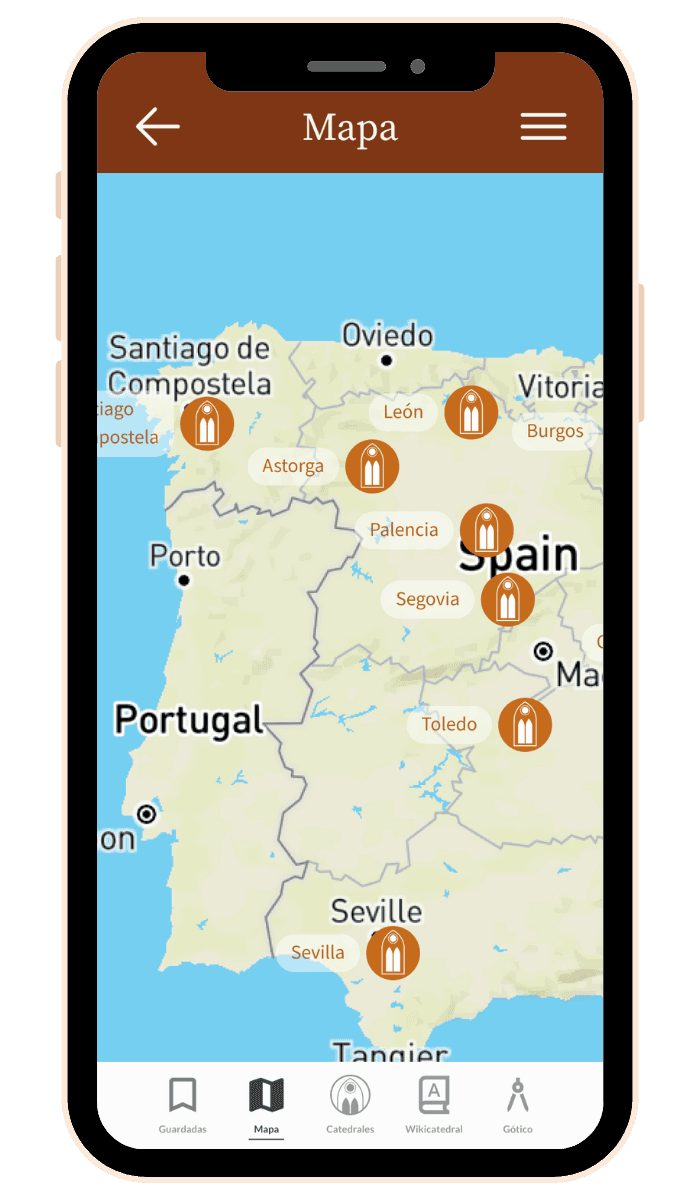
Navigation is structured through a bottom tab bar that provides direct access to the core sections of the app, allowing users to move freely between different modes of exploration:
Map: explore the geographic location of Gothic cathedrals and access their information pages
Cathedrals: main entry point to browse and access detailed information about each cathedral
Wiki: external resource offering explanations of Gothic architectural elements and terminology
Gothic Phases: tab-based navigation to explore and compare the different phases of Gothic architecture in Spain
This structure was designed to support non-linear navigation, enabling users to build knowledge progressively according to their interests.
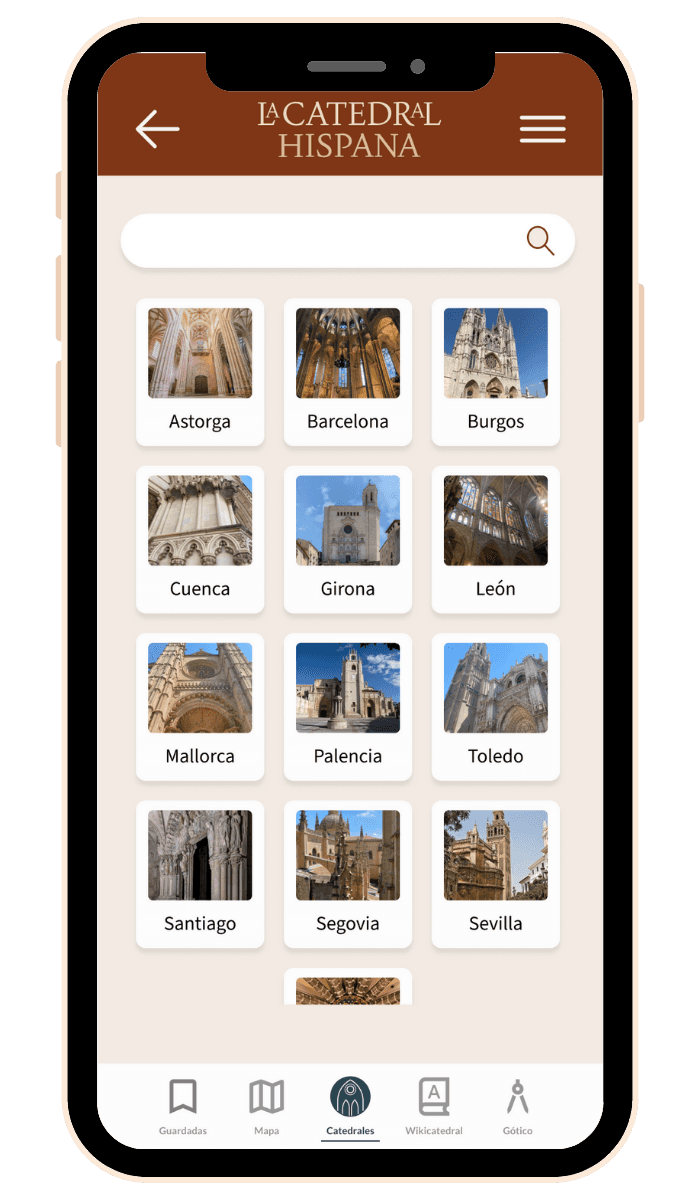
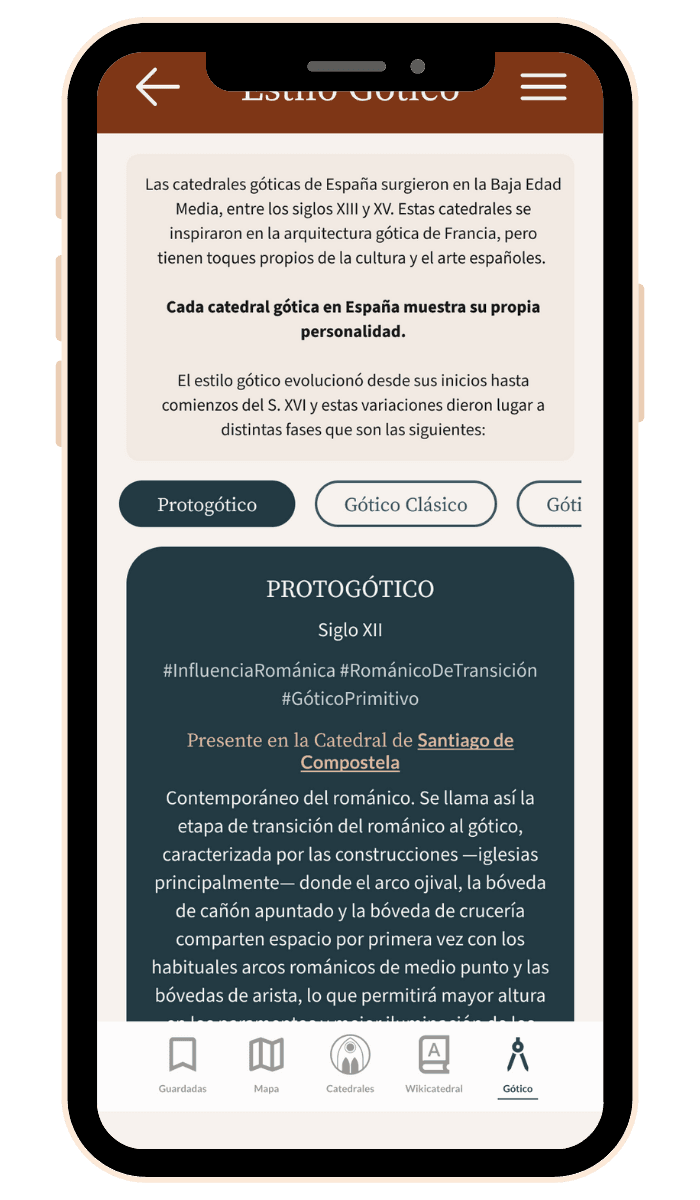
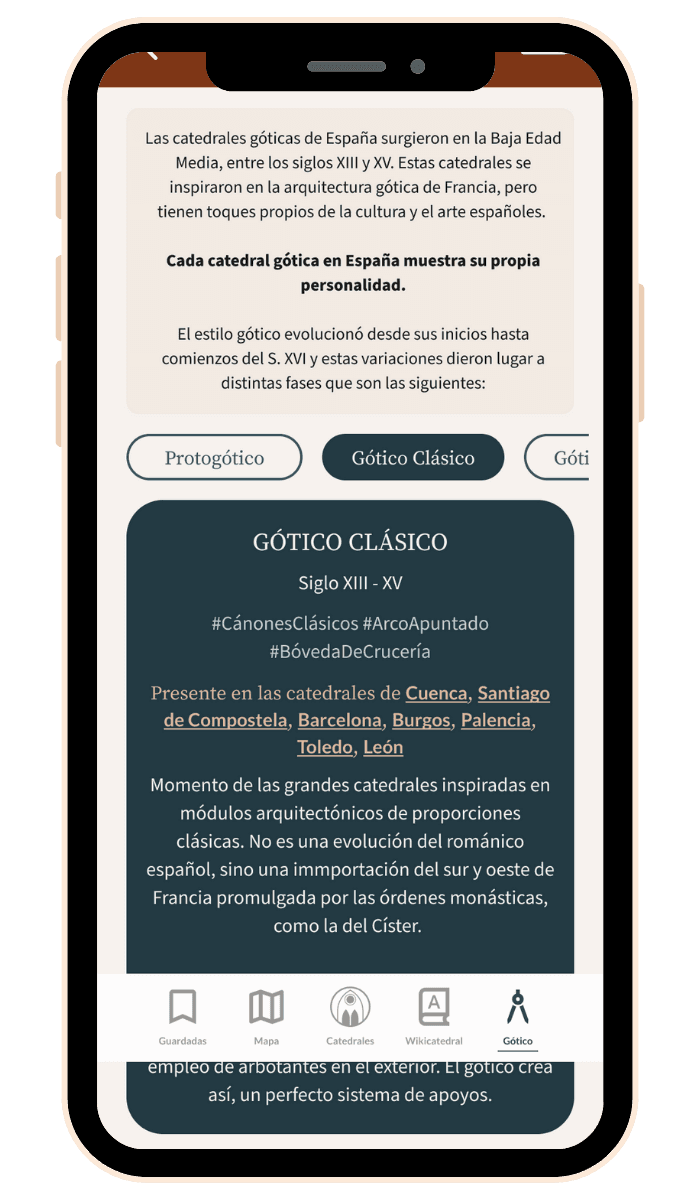
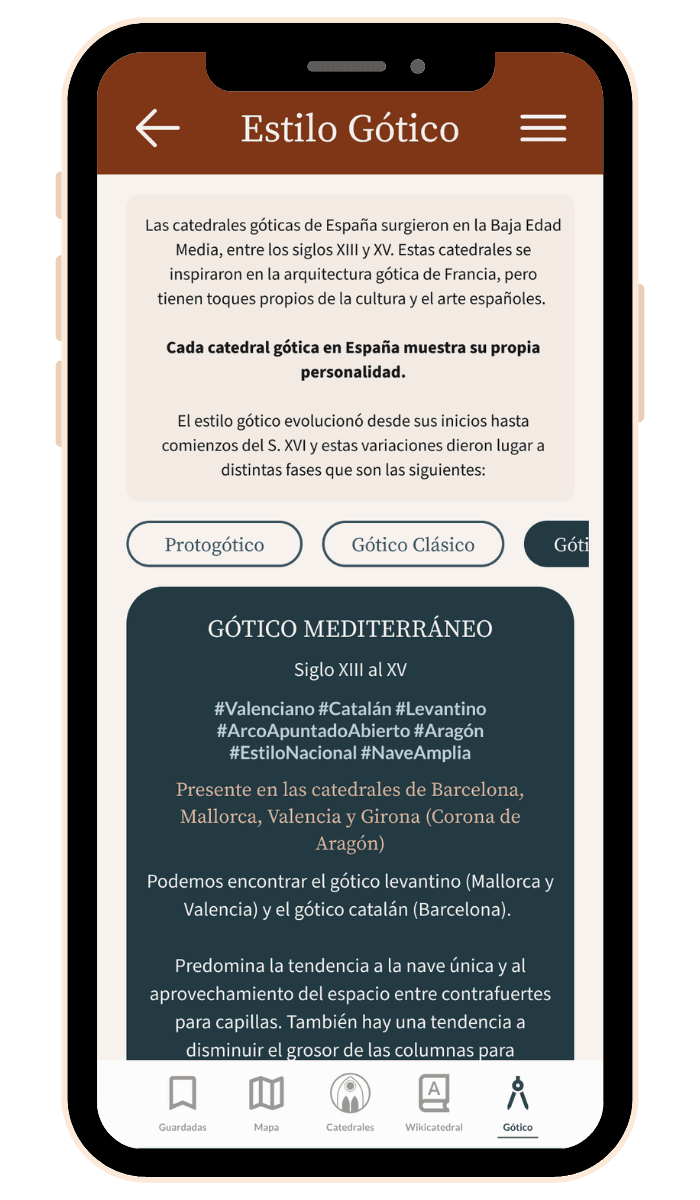
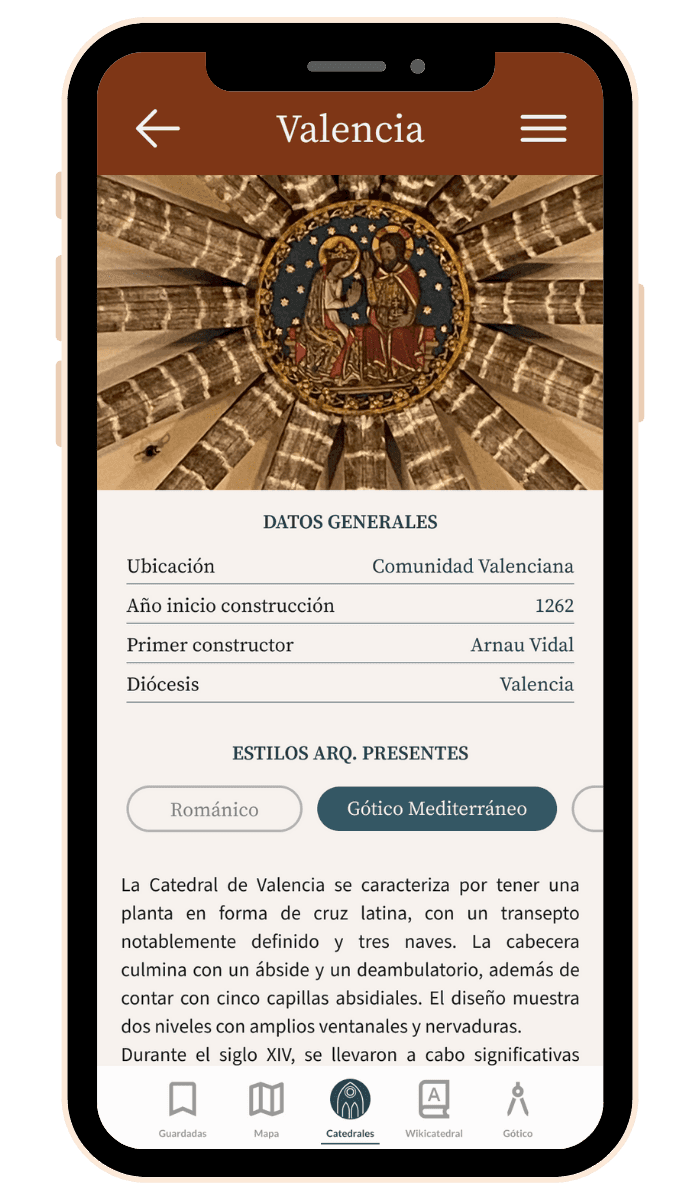
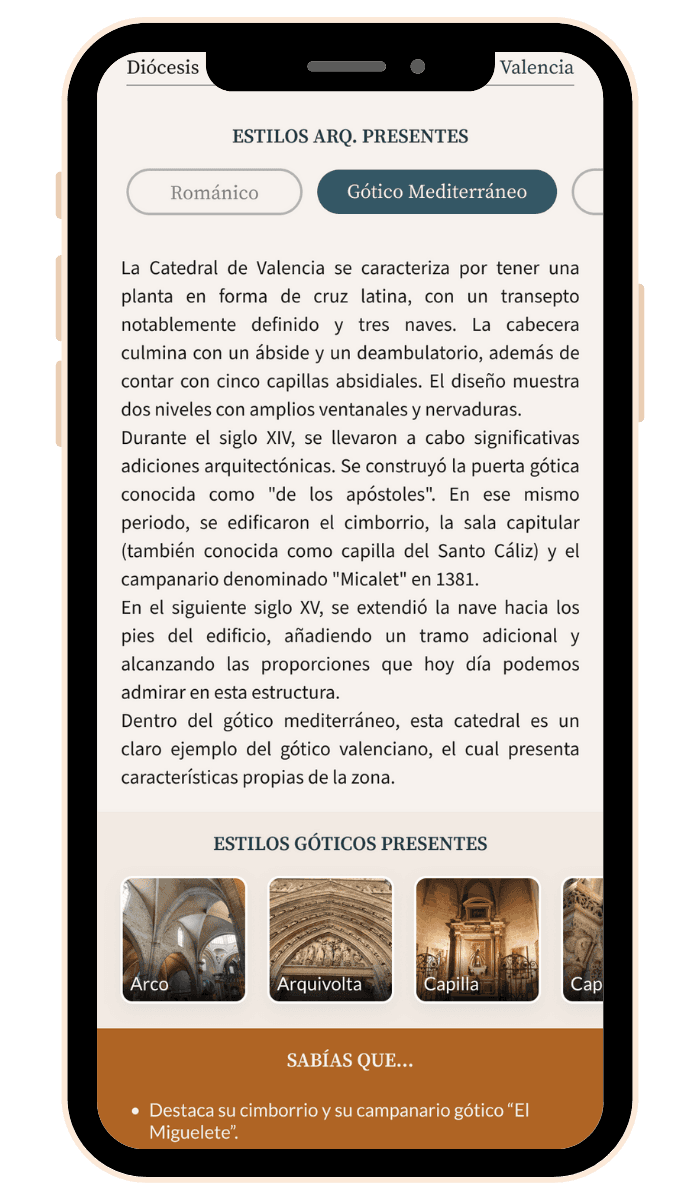
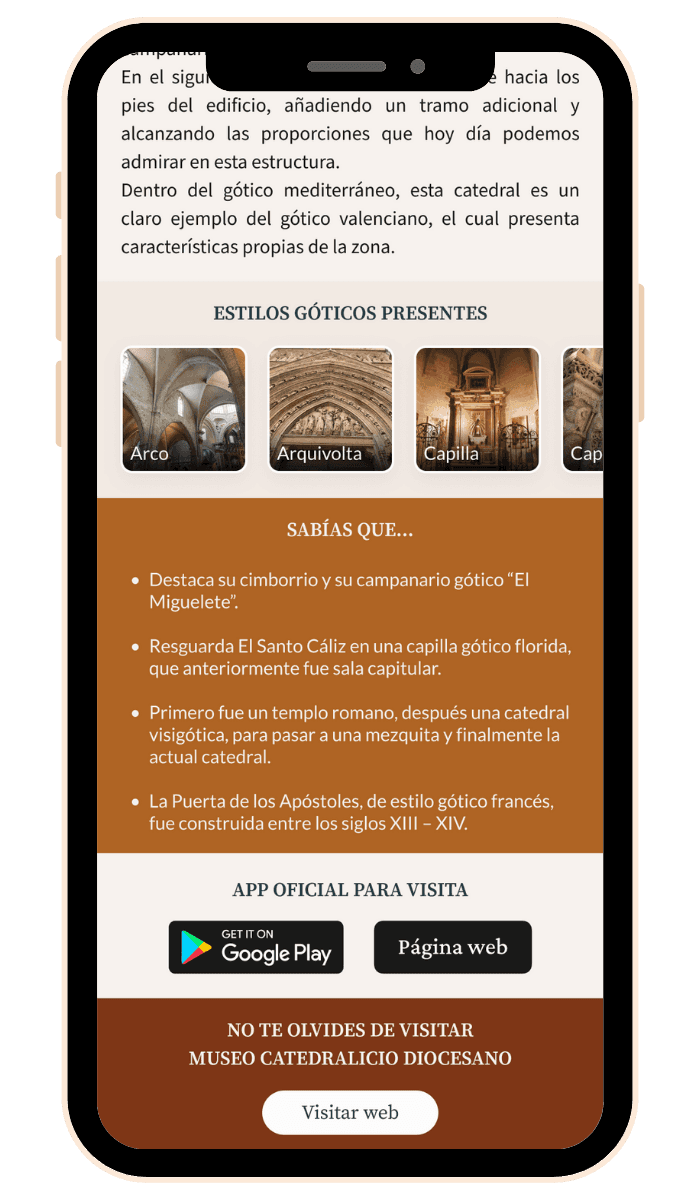
Each cathedral is presented through a dedicated detail screen that includes a technical overview, the Gothic phases represented in the building, descriptive content, an image gallery, and a “learn more” section for deeper exploration.
Content length and narrative structure were standardized across all cathedrals to ensure equal visibility and avoid hierarchical bias between sites. This decision reinforces the idea of the system as a shared cultural network rather than a collection of isolated landmarks.
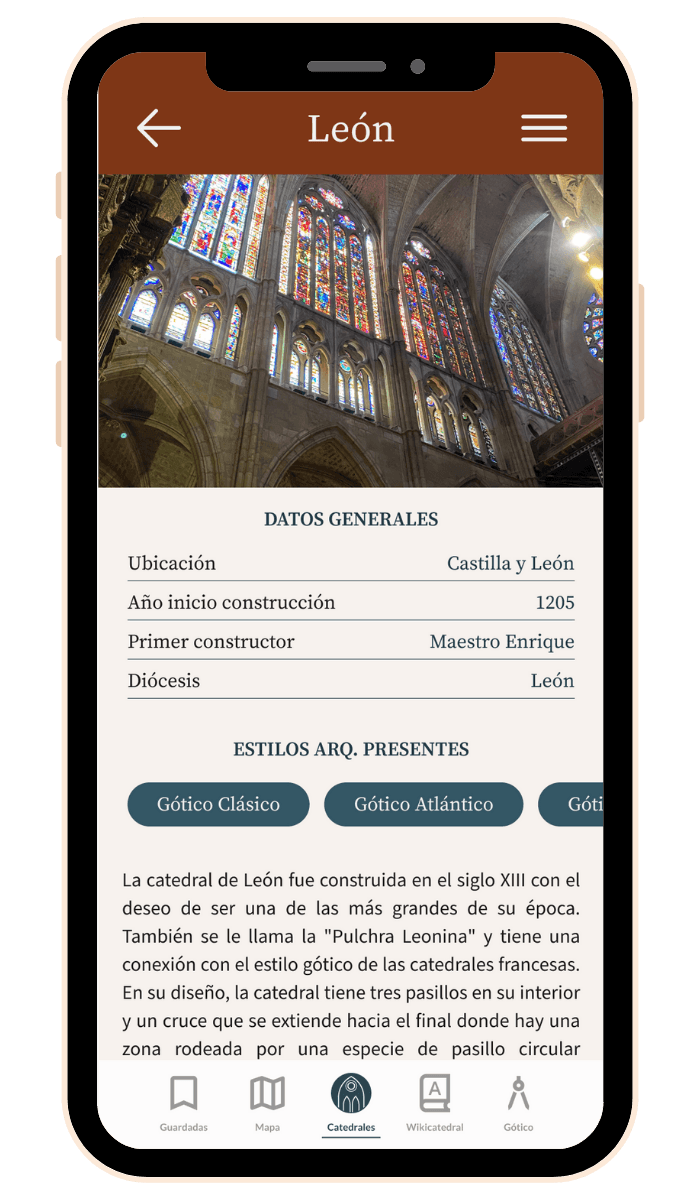
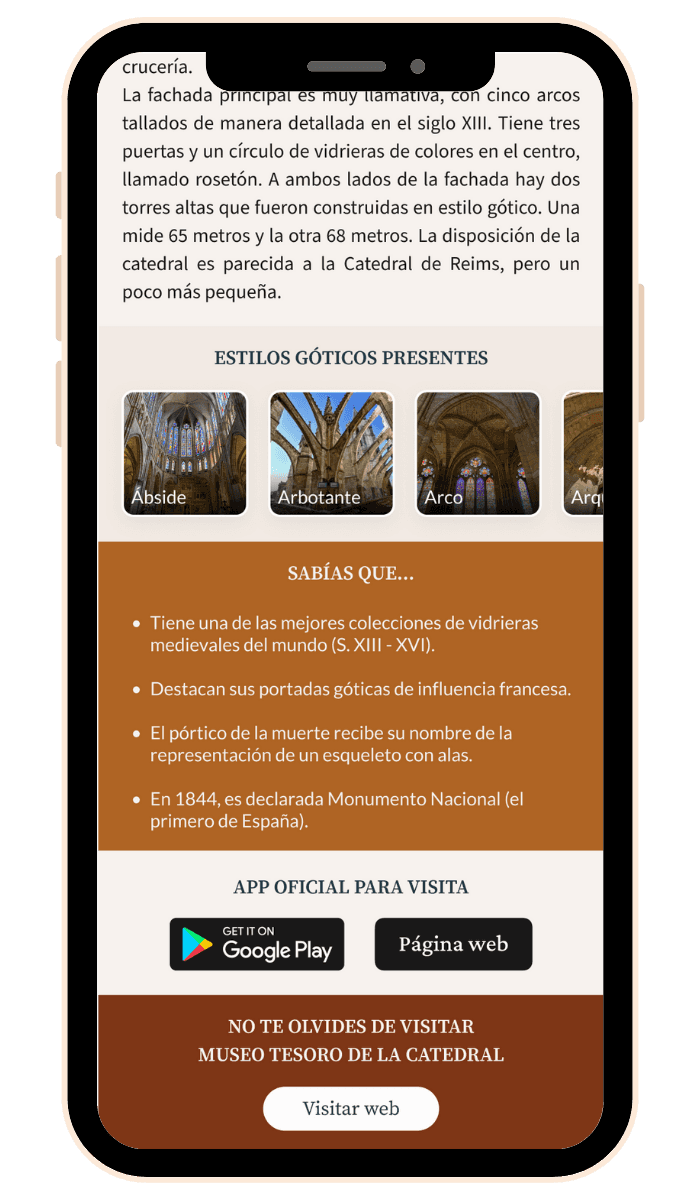
The high-fidelity prototype was evaluated through heuristic walkthroughs and user testing sessions with representative profiles (cultural tourists and students). The goal was to validate content comprehension, navigation clarity, and the system’s ability to support learning without increasing cognitive load.
Testing revealed friction points related to user support, content depth, and orientation within the system, highlighting the need for stronger guidance and contextual cues beyond visual design.
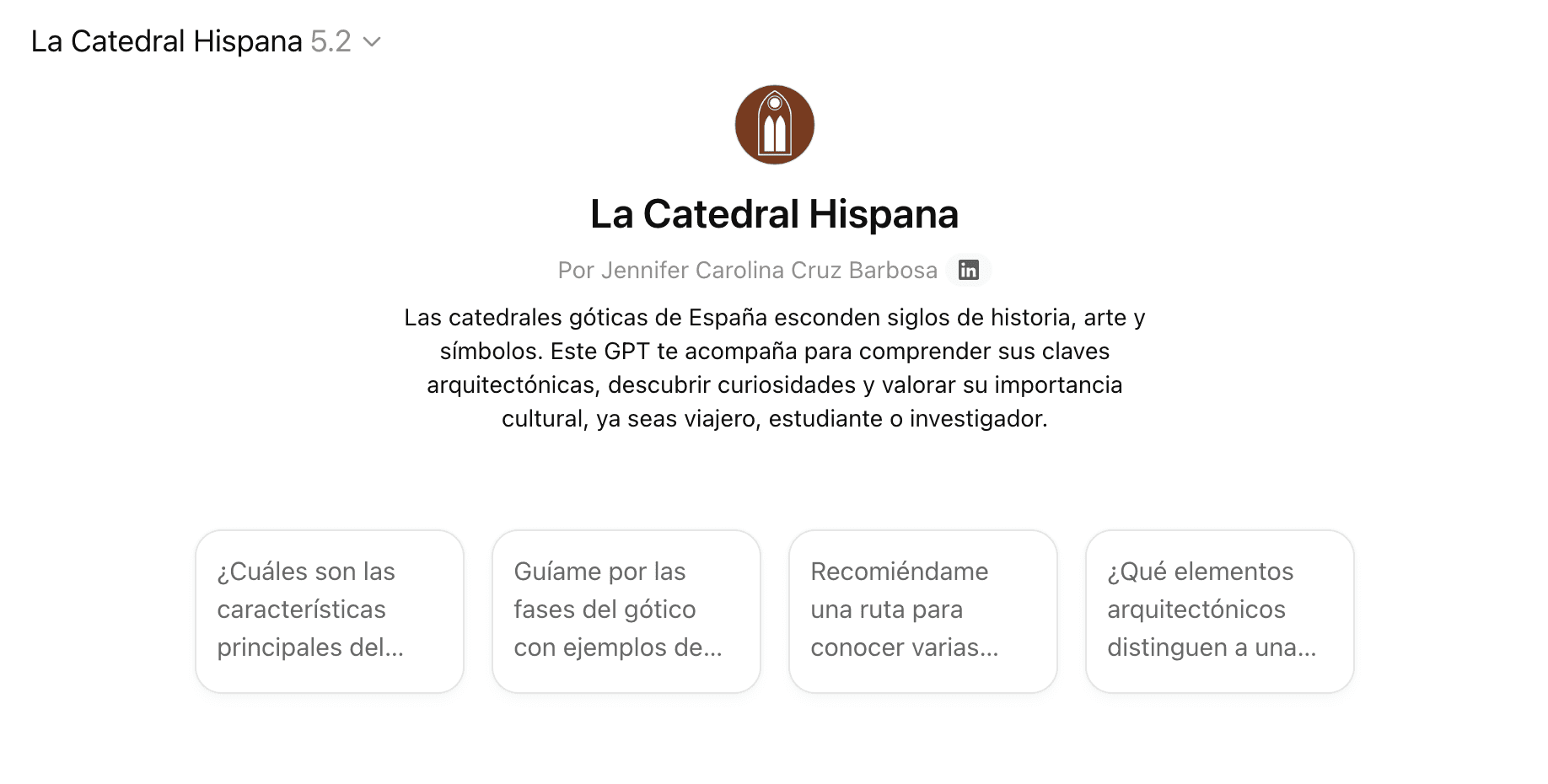
With the emergence of ChatGPT, I designed a specialized GPT as a natural extension of the ecosystem. The assistant complements existing content through conversational interaction.
The experience dynamically adapts to different user profiles—tourist, student, or academic—by adjusting tone, depth, and examples. From a UX perspective, I focused on Human–AI Interaction patterns grounded in clarity, explainability, and trust: explicit domain boundaries, contextualized responses using concrete examples, and polite refusals for off-topic queries. This conversational layer supports autonomous learning, complements the system’s content, and lays the foundation for future personalized and contextual experiences.
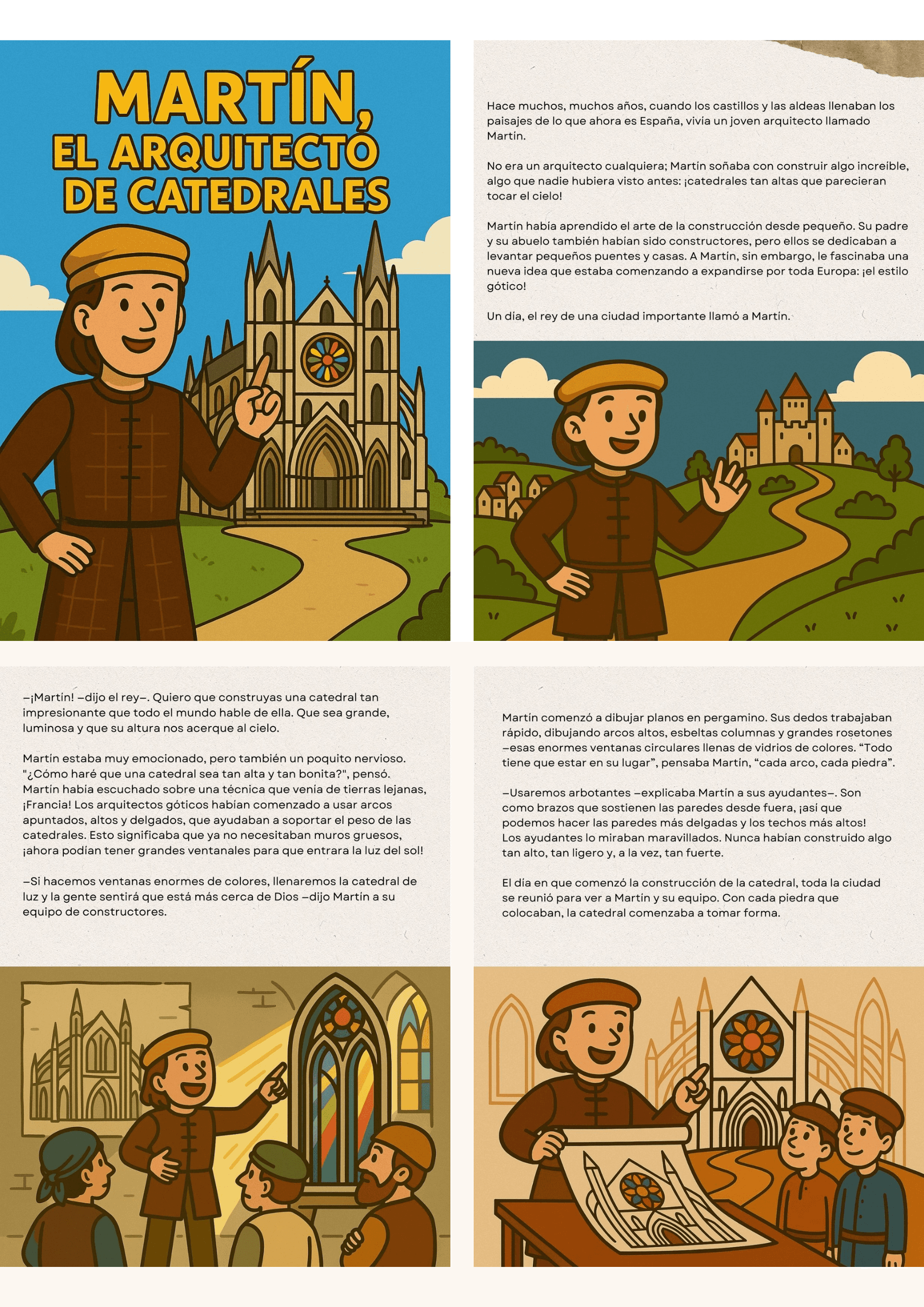
Martín is a key character within the transmedia ecosystem, conceived to act as a connective element across the project’s different digital touchpoints and experiences.
Rather than a purely visual asset, Martín operates as a mediator between heritage content and the user. He supports the understanding of complex concepts, ensures narrative continuity across channels, and enhances immersion within the project’s universe—particularly in educational and children-focused contexts.
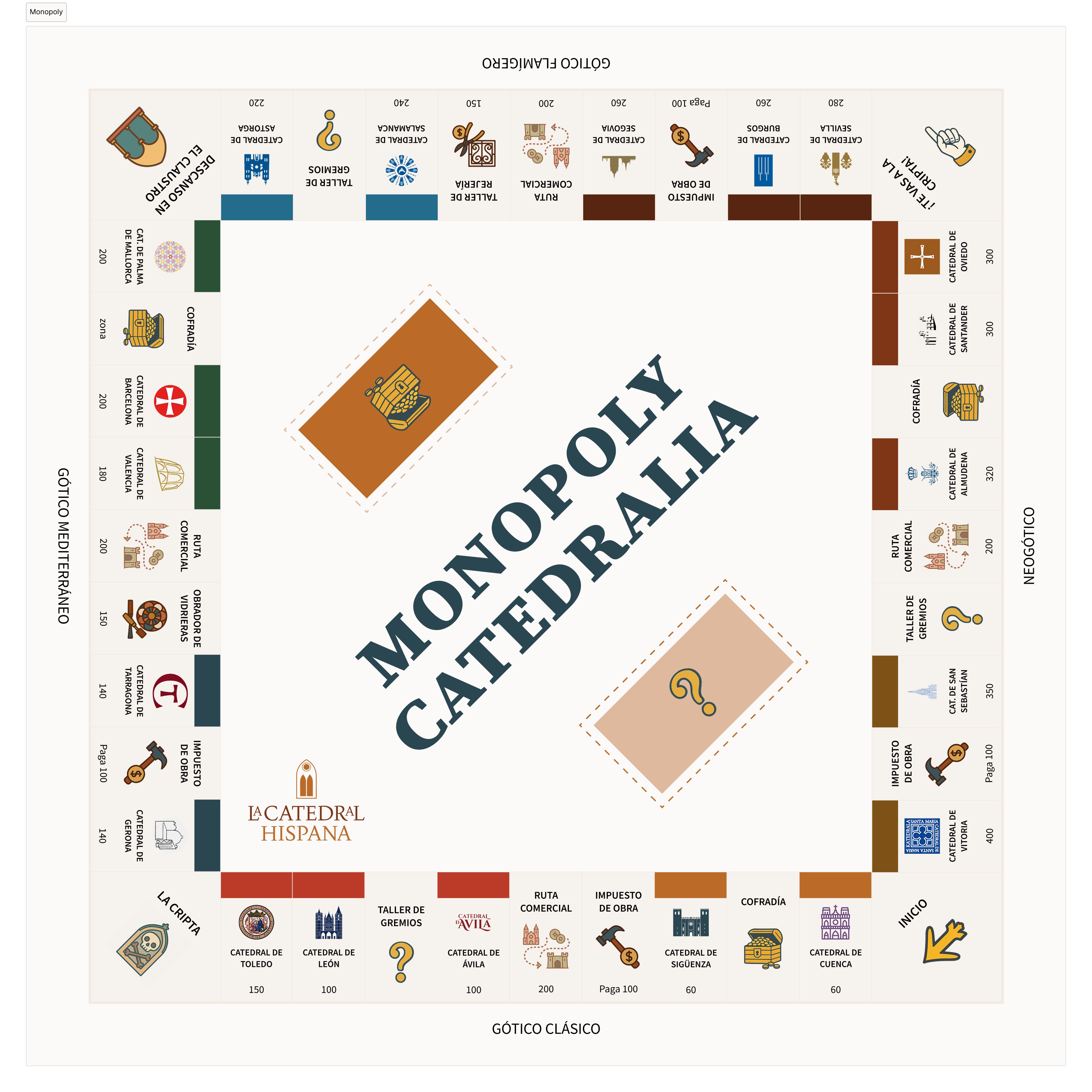
The project includes a Monopoly-based adaptation conceived as a playful extension of the transmedia ecosystem, using a widely familiar game mechanic to make heritage learning participatory and accessible. Instead of superficial gamification, the game’s structure functions as a framework for exploration and discovery.
From a UX perspective, the board and its rules function as an action-based learning system—moving, deciding, repeating, and connecting concepts.
This project confirmed that UX design can act as a strong bridge between academic research, cultural heritage, and technology, enabling complex knowledge to be translated into accessible, living systems. Designing from a system perspective rather than isolated products was key to maintaining coherence across channels and user profiles.
Thanks to the predefined information architecture, visual design, and content structure, the system supports progressive updates over time. Future iterations could incorporate additional Gothic Spanish cathedrals—such as Oviedo, Pamplona, Salamanca, or Ávila—without redesigning the core model.
The Spanish Cathedral results in a replicable transmedia model for digital cultural heritage mediation. Beyond a single solution, the project functions as a methodological guide adaptable to cultural institutions seeking coherent experiences across physical and digital environments.
The model outlines a structured journey—from research to evaluation—integrating UX, information architecture, storytelling, gamification, and e-learning. This approach supports access, understanding, active participation, and long-term system sustainability.
For further details, the full PhD thesis is available at:
This project reinforced my belief that designing heritage is not about preserving the past, but about making knowledge inhabitable in the present.